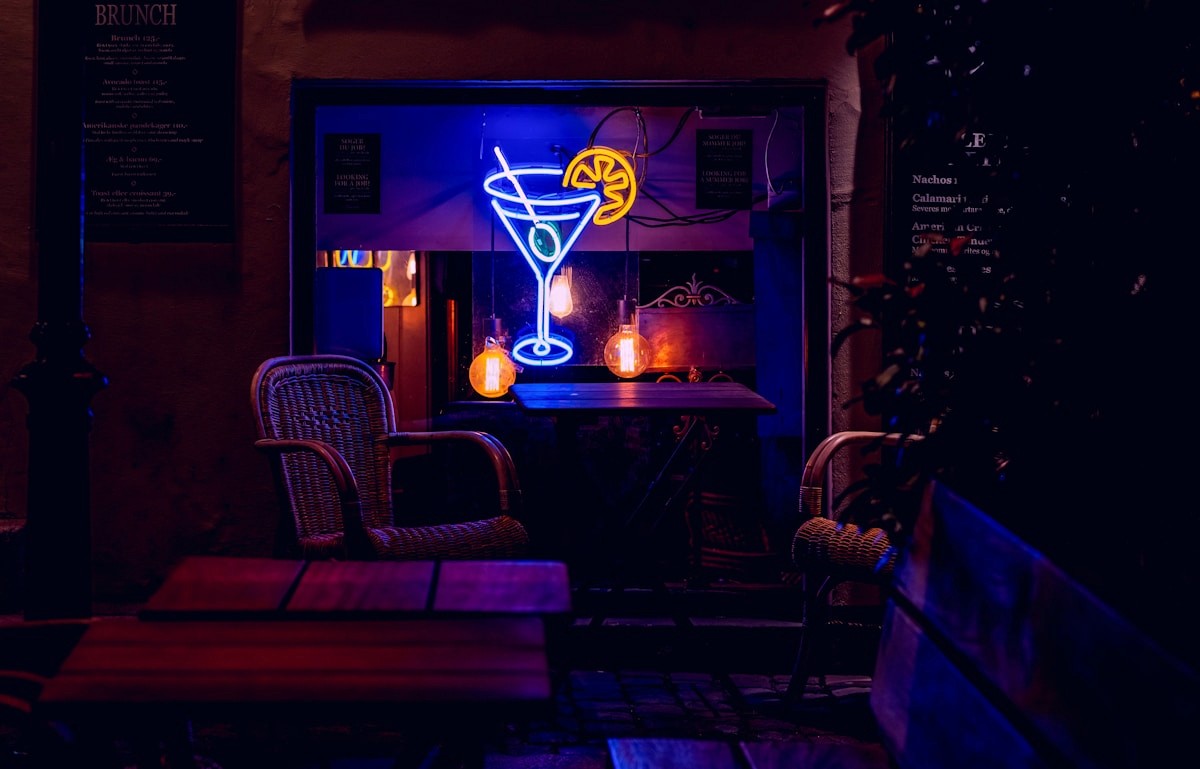
Right on Võ Văn Kiệt in District 1's own Cầu Kho ward, APLUS SAIGON sits squarely within one of the smallest yet consistently most high-energy categories found anywhere across the entire city's nightlife map: the true nightclub, built specifically and deliberately around dance music, a genuinely serious sound system, and sustained late-night volume, rather than around quiet conversation, carefully mixed cocktails, or any kind of considered sit-down dinner service. Of the roughly 77 individual venues tracked across the entirety of Saigon's nightlife scene, only nine carry the Nightclub label specifically, and APLUS SAIGON's own listing anchors its whole identity around a single, direct claim rather than a long list of features: a modern sound and lighting system. Paired together with its #HardcoreEDM vibe tag and its #CommercialDance music genre tag, that combination sends a genuinely clear, entirely unambiguous signal about exactly what kind of night a visitor can expect this particular venue to actually deliver. This guide thoroughly covers everything APLUS SAIGON's own listing makes public — its sound system, its music identity, its dress code, its operating hours, its precise Cầu Kho location, and exactly how to book a visit — built entirely and consistently from real, independently confirmed details, without ever inventing specific facts the venue itself hasn't actually published anywhere.
Nightclubs occupy a unique place in any city's nightlife economy. Unlike a bar or restaurant, which can succeed on atmosphere, food quality, or personal service, a nightclub lives or dies almost entirely on its ability to fill a dance floor and keep it moving for hours at a stretch. That requires a genuinely different kind of ongoing investment — not primarily in menu development or interior styling the way a restaurant might prioritize, but specifically in acoustic engineering, careful lighting programming, and a consistent booking strategy that keeps the music reliably matched to what the crowd actually wants to hear on any given night of the week. APLUS SAIGON's own listing, brief as it is, points directly at that infrastructure-first identity.
What Is APLUS SAIGON?
APLUS SAIGON sits in the Nightclub category, one of the city's smallest and most tightly defined venue types. Where Saigon's roughly 49 general Bar venues and 14 Restaurant-category spots between them cover a genuinely huge range of different atmospheres and occasions, the Nightclub category by contrast is considerably narrower and far more consistent in its core purpose: dedicated dance-floor venues built specifically around DJ-driven music programming, serious technical production, and a genuinely high-energy, dance-ready crowd every single night the doors are open. APLUS SAIGON's own highlight — a modern sound and lighting system — is exactly the kind of infrastructure investment that defines a real nightclub rather than a bar that happens to play loud music.
The venue's own vibe tag, #HardcoreEDM, places it in a genuinely small cluster within Saigon's nightlife scene — around five venues citywide carry that specific tag, reserved for the highest-intensity, most dance-floor-focused venues in the city. Its music genre tag, #CommercialDance, narrows that identity further still: this is a club built specifically around big-room, crowd-pleasing dance music rather than underground techno or niche electronic subgenres, a format deliberately designed to keep a packed floor moving all night rather than catering primarily to specialist listeners chasing a particular sound. That combination of tags — high-energy vibe and accessible, broadly appealing genre — gives a fairly complete picture of the specific kind of night the venue is built to deliver, before a visitor has even walked through the door.
APLUS SAIGON's own official listing doesn't include an extended "about" description the way many of the city's bars and restaurants tend to — its overall identity is communicated instead purely through its highlight, its vibe tag, and its specific music genre, a more direct, less narrative approach to self-presentation. That's consistent with the nightclub format itself: a venue like this typically sells itself through its music, its production, and its reputation on the floor rather than through descriptive copywriting.
The Cầu Kho ward itself, where APLUS SAIGON sits, isn't among District 1's most heavily trafficked tourist corridors, which fits a pattern seen at several of the city's nightclub venues: rather than competing for street-level foot traffic the way a bar might, a club draws its crowd through reputation, event promotion, and word of mouth, meaning the exact street it happens to sit on ultimately matters considerably less than what actually happens musically and energetically once guests are through the door and onto the floor itself.
Atmosphere & Design
The single confirmed detail about APLUS SAIGON's physical space — its modern sound and lighting system — is nonetheless a meaningful one. In nightclub design, sound and lighting infrastructure isn't a decorative afterthought; it's the core of the product itself. A genuinely modern sound system means a room engineered specifically for high-volume, high-fidelity playback without distortion, capable of delivering the kind of bass-forward, immersive sound that commercial dance music is built to be heard through. Modern lighting design, similarly, typically means programmable rigs synced to the music, capable of building and releasing energy across a set rather than running static, decorative lighting.

Combined with its #HardcoreEDM vibe tag, the overall picture is of a venue built entirely around the dance floor experience — not a lounge with a DJ tucked quietly into the corner, but a room genuinely engineered from the ground up specifically to deliver commercial dance music at true club-level volume and matching visual intensity throughout the entire night. The #SexyDress dress code reinforces that same energy: this is a room where guests are expected to dress to be seen and to match the venue's high-energy identity, in contrast to the understated casual policies found at many of District 1's quieter bars.
Lighting programming in a modern club is a genuinely technical discipline in its own right. Rigs are typically built from moving heads, LED wash fixtures, strobes, and laser elements, all synced to a lighting console that can be triggered manually by an operator reading the crowd in real time, or pre-programmed to follow specific track cues. A "modern" system, as APLUS SAIGON's own listing describes, implies current-generation fixtures capable of faster movement, richer color mixing, and tighter synchronization with the DJ booth than older analog lighting setups — the meaningful difference between a room that simply happens to have colored lights installed somewhere in the ceiling and one where the entire lighting design functions as a genuine, integrated part of the musical experience itself, rather than mere decoration layered on top of it.
What to Expect
The Sound and Lighting System
APLUS SAIGON's own listing leads with its production infrastructure rather than its drinks menu or its decor — a telling choice for a nightclub. This guide won't invent specific speaker brands, exact wattage figures, or detailed lighting rig specifications beyond what's actually published in the venue's own listing, but the explicit emphasis on a "modern" sound and lighting setup clearly signals a venue that has made a real, tangible capital investment in its actual core product: the physical, felt experience of the music itself, delivered properly rather than as an afterthought. For a nightclub, that infrastructure is arguably the single most important differentiator between venues, more than décor or drinks.
Sound system quality in particular is something most visitors only notice when it's missing. A well-tuned club system delivers clean, distortion-free bass even at high volume, with clarity across the full frequency range so vocals and melodic elements don't get lost under the low end. A poorly tuned or outdated system, by contrast, tends to blur into an undifferentiated wall of noise at volume, fatiguing rather than energizing a crowd over the course of a long night. APLUS SAIGON's explicit emphasis on a "modern" system is a direct claim that it has avoided that common failure point.
Music: Commercial Dance
APLUS SAIGON's #CommercialDance music genre tag sets clear expectations. Commercial dance music typically covers big-room house, mainstream EDM, and dance-pop remixes — tracks built for broad crowd appeal and maximum floor energy rather than niche genre purity. This is music designed to be immediately recognizable and easy to move to, a deliberate choice for venues aiming to fill a floor with a broad cross-section of nightlife-goers rather than a narrower crowd of genre specialists.
Commercial dance sets typically draw from a rotating pool of current chart hits remixed into club-ready tempo and structure, alongside proven crowd-pleaser tracks from previous years that reliably trigger a strong floor reaction. DJs working this particular format genuinely prioritize reading the room and consistently maintaining floor energy over showcasing obscure or deep-cut selections, a meaningfully different skill set from the more specialist, individual-track-selection-focused approach typically favored within underground electronic music scenes elsewhere. For visitors who specifically want a night where nearly every single track played feels at least somewhat familiar and immediately recognizable, commercial dance programming reliably delivers exactly that particular experience, night after night, regardless of which specific DJ happens to be behind the booth.
Dress Code
The #SexyDress dress code at APLUS SAIGON sets an expectation of dressing to stand out — fitted, statement-making outfits rather than casual streetwear or business attire. That policy is standard across much of Saigon's high-energy nightclub scene and fits the venue's overall #HardcoreEDM, dance-floor-first identity.
In practice, "sexy dress" at a Saigon nightclub tends to mean well-fitted, statement pieces — for many guests that means bold colors, form-fitting silhouettes, and a general willingness to dress for the occasion rather than default to safe, neutral basics. It's worth noting this is a considerably different register from the formal #LuxuryGentleman policies found at some of the city's more upscale cocktail bars, or the fully casual #CasualOnly policies at neighborhood spots — nightclub dress codes are less about formality and more about visual energy matching the room.
Group Bookings and VIP Tables
Nightclubs across Saigon, and internationally, commonly offer VIP table service for groups — a dedicated seating area with bottle service, often at a premium over standard entry. APLUS SAIGON's own CMS listing doesn't detail a specific VIP table program, so this guide won't speculate on pricing or availability, but visitors interested in that kind of arrangement should reach out directly via the venue's Zalo contact, since table service details, minimum spend requirements, and current availability all tend to be handled through direct, personal booking conversations rather than published, fixed rate cards that stay the same from week to week.
Peak Nights and Programming
Nightclub programming, unlike a bar's relatively static weekly rhythm, often varies significantly from night to night — different resident or guest DJs, themed nights, and special events are common across the format citywide. APLUS SAIGON's CMS listing doesn't publish a specific events calendar, so visitors with a particular night or DJ in mind should confirm current programming directly via the venue's Zalo contact rather than simply assuming any single given night will necessarily match the energy or lineup of another, since club programming genuinely varies far more than a typical bar's weekly rhythm does.
Who It's Best For
APLUS SAIGON is a strong fit for visitors specifically looking for Saigon's highest-energy, most dance-floor-focused nightlife — groups celebrating a big night out, EDM and commercial dance fans, and anyone who wants to experience the city's club scene at full volume rather than a quieter bar alternative. It's a less natural fit for a quiet conversation, a considered dinner, or a low-key first date — Saigon has dozens of venues built for those occasions, and APLUS SAIGON isn't trying to be one of them.
It's also worth being realistic about noise level and physical demands. A genuine nightclub built around a modern sound system and #HardcoreEDM programming will run considerably louder than conversation-friendly volume for the entire duration of a visit, and a full night on a packed dance floor is a physically active experience in a way sitting at a bar isn't. Visitors sensitive to loud sound, or those planning an early morning the next day, should factor that reality into their decision-making beforehand, while visitors specifically seeking out that fully immersive, high-energy dance-floor experience will find exactly what APLUS SAIGON's own published listing consistently promises them, night after night, without exception.
Best Time to Visit
APLUS SAIGON's published opening hours run 17:00 to 02:00, a genuinely unusually early opening time for a dedicated nightclub — most of the city's other comparable club venues don't typically reach their peak energy until well after 11 PM, even though their doors may technically open considerably earlier in the evening than that. Visitors specifically chasing the club's fullest sound-and-lighting experience are likely best served by a later arrival, once the room has filled and the DJ program has built toward its peak, while an earlier visit may instead deliver a considerably calmer, still-filling room that hasn't yet reached its full nightly capacity or energy level.
The venue's own official listing doesn't publish any specific peak-hour data or a list of regularly closed days, so this guide won't speculate beyond the stated operating hours themselves, which remain the only confirmed detail available. Given the nightclub format and the #HardcoreEDM, #CommercialDance identity, weekend nights are the most likely time to catch the venue at its highest energy, though visitors should always confirm current event schedules and any special lineups directly via the venue's own Zalo contact ahead of time, since nightclub programming often varies night to night in ways a static CMS listing can't capture.
Timing also matters for a more practical reason: transportation availability late at night. While Saigon's ride-hailing apps operate around the clock, demand and pricing can shift meaningfully during the latest hours, particularly around closing time when multiple nearby venues empty out simultaneously. Visitors planning to stay until close, or anywhere near APLUS SAIGON's 2 AM closing time, are genuinely well served by booking a return ride in advance through an app rather than trying to hail one on the street once already outside and ready to leave.
For visitors combining APLUS SAIGON with other stops on the same night — a dinner beforehand, or a bar visit earlier in the evening — it's worth planning the overall route with Cầu Kho's position on the western edge of District 1 in mind. Rather than treating APLUS SAIGON as a quick stop between two more central venues, it tends to work better as a deliberate final destination for the night, given both its location and its late closing time.
Getting There
APLUS SAIGON is located at 492 Võ Văn Kiệt, Cầu Kho, Quận 1, TP. HCM — directly on Võ Văn Kiệt, a genuinely major boulevard running the entire length of the western edge of District 1, situated within the Cầu Kho ward specifically. That's a notably different setting from the tighter, alley-dense streets of central District 1: Võ Văn Kiệt is a wide, high-traffic thoroughfare, meaning the venue remains genuinely easy to approach by car or motorbike even though it sits slightly outside the most densely walkable core of the district itself. The venue's own Google Maps link provides precise navigation for visitors approaching from elsewhere in the city.
Given its location on a major boulevard rather than deep within District 1's denser core, a ride-hailing car or taxi is the most practical way to reach APLUS SAIGON for most visitors, particularly for a late-night visit or departure when walking through unfamiliar streets is best avoided. Võ Văn Kiệt's status as a major traffic artery also means it's generally well lit and easy for drivers to navigate at night, in contrast to some of District 1's narrower, less predictable interior streets.
Nearby Nightlife
Saigon's genuinely small, tightly defined Nightclub category gives visitors a remarkably complete overall picture of the entire city's dance-floor scene within one relatively short, manageable list:
Canalis Club, over in Quận 3, shares APLUS SAIGON's exact same #HardcoreEDM and #CommercialDance identity down to both tags, making it a genuinely close comparison point for visitors specifically chasing that same high-energy, big-room dance sound at a different venue elsewhere across the city.
LOCO Complex, described in its own listing as an "entertainment complex," also carries the #HardcoreEDM and #CommercialDance tags, strongly suggesting a considerably larger, multi-venue format overall, in fairly direct contrast to APLUS SAIGON's own more focused, singular dedicated club space.
The WANN Saigon rounds out the #HardcoreEDM, #CommercialDance cluster, with its own listing specifically emphasizing "trusted bookings" and "exclusive offers" — genuinely worth checking directly for any visitor actively comparing several different club options against each other for one specific night out.
For a different musical register, Weeknd SGN, on the third floor of a contemporary space, leans into #HipHop rather than commercial dance, offering a genuine genre alternative to consider while still remaining broadly within that same #HardcoreEDM overall energy level and intensity. The Observatory, a rooftop lounge with a #Techno identity, offers yet another genuine electronic music alternative to explore, well suited to visitors who specifically prefer techno's more underground, textured sound over commercial dance's broader, more universally accessible mainstream appeal.
For visitors who want a lower-key alternative within the same broad category, Neighborhood SGN, tagged #Crowded rather than #HardcoreEDM and explicitly describing itself with a distinctive "house party vibe, no VIP" approach that sets it apart from more traditional bottle-service-oriented clubs, and CINÉ Saigon, a genuinely distinctive converted former cinema featuring an artistic, design-forward space of its own, both offer real, substantive alternatives to APLUS SAIGON's own dedicated, full-intensity dance-floor experience.
Bodega.sgn, tagged #Crowded with a #HipHop music identity, offers yet another genuinely genre-specific alternative for any visitor who specifically wants to compare hip-hop programming quality and energy across two entirely different Saigon venues within the very same single night out. Taken together, this full list represents essentially the complete landscape of Saigon's dedicated dance and club scene — a genuinely useful reference for any visitor building an itinerary specifically around the city's electronic and dance music offerings rather than its bar or restaurant scene.
Visitors mapping out that kind of club-focused trip should also keep district geography in mind: most of Saigon's nightclub scene, APLUS SAIGON included, clusters within District 1 and the adjacent Quận 3, meaning a multi-night club crawl is genuinely practical without extensive cross-town travel between stops. That geographic concentration is itself a useful piece of planning information, distinct from the city's bar scene, which spreads more widely across District 1, Thảo Điền, and other neighborhoods.
Frequently Asked Questions
What are APLUS SAIGON's opening hours?
APLUS SAIGON is open from 17:00 to 02:00 each night, according to its own officially published listing, covering an unusually early opening through to a genuinely late closing time.
Is there a dress code at APLUS SAIGON?
Yes — the venue's own official listing marks its dress code plainly as #SexyDress, directly reflecting the venue's overall high-energy nightclub identity throughout. Guests are genuinely expected to dress in a way that lets them stand out rather than simply defaulting to casual, everyday streetwear for the occasion.
What kind of music does APLUS SAIGON play?
Per its own official listing, APLUS SAIGON's music genre is tagged plainly as #CommercialDance, a category covering big-room house, mainstream EDM, and dance-pop remixes specifically built for broad, universally crowd-pleasing floor energy from start to finish.
What makes APLUS SAIGON different from a regular bar?
Its own listing emphasizes a modern sound and lighting system as its central feature, along with a #HardcoreEDM vibe tag — signaling a genuinely dedicated nightclub built specifically around serious technical production and sustained dance-floor energy, rather than simply a bar that happens to have some music playing quietly in the background.
How do I book at APLUS SAIGON?
The venue lists a direct Zalo contact specifically for handling all bookings and general inquiries visitors might have ahead of a planned visit.
Where exactly is APLUS SAIGON located?
The full address is 492 Võ Văn Kiệt, Cầu Kho, Quận 1, TP. HCM, situated directly on a genuinely major boulevard running along the entire western edge of District 1. A Google Maps link is provided directly by the venue.
Is APLUS SAIGON good for a bachelorette or big group celebration?
Based squarely on its own high-energy #HardcoreEDM identity and commercial dance music program, yes, genuinely — it's genuinely well suited to a group specifically looking for a real dance-floor night out. Visitors planning a genuinely larger celebration should reach out via the venue's Zalo contact in advance to check on group arrangements.
Does APLUS SAIGON offer VIP tables or bottle service?
The venue's own published CMS listing doesn't currently detail any specific VIP program, so this guide deliberately won't speculate or guess on exact pricing or general availability. Visitors genuinely interested in table service arrangements should reach out directly via the venue's own Zalo contact to discuss specific options, pricing, and current availability for their particular date.
Is APLUS SAIGON loud?
Yes — as a genuinely dedicated nightclub carrying both a #HardcoreEDM vibe tag and an explicitly modern sound system, APLUS SAIGON is deliberately built to run at true club volume consistently throughout an entire night of service, considerably louder overall than a typical neighborhood bar or quiet lounge setting.
What should I wear to APLUS SAIGON?
The venue's own official #SexyDress code specifically calls for fitted, genuinely statement-making outfits rather than casual everyday streetwear or overly formal business attire of any kind — think bold, confident pieces well suited to a high-energy dance floor environment and the crowd that fills it.
Does APLUS SAIGON get busy on weeknights?
The venue's own official listing doesn't publish any specific attendance data broken down by day of the week, so this guide deliberately won't speculate or guess at that particular detail. As with most dedicated nightclubs, weekends are generally the most reliable bet for genuine peak energy, though visitors can and should confirm current programming directly via the venue's own Zalo contact beforehand.
Is there an entry fee or cover charge at APLUS SAIGON?
The venue's own published CMS listing doesn't specify any particular entry pricing figure, so this guide deliberately won't invent or estimate a specific number. Visitors should always confirm current entry policy and any applicable cover charge directly via the venue's own Zalo contact well before their planned visit.
Understanding Saigon's Nightclub Category
It's worth stepping back to understand exactly how rare a dedicated nightclub is within Saigon's overall nightlife landscape. Out of roughly 77 tracked venues across the city, only nine — including APLUS SAIGON — carry the Nightclub label specifically, compared to 49 general bars, 14 restaurants with a nightlife angle, and 5 dedicated sky bars. That relative scarcity reflects a genuinely real economic and logistical constraint: an authentic nightclub requires significant upfront capital investment in professional-grade sound systems, full lighting rigs, and physical space specifically zoned and purpose-built for sustained late-night, high-volume operation night after night — a considerably higher barrier to entry than simply opening a standard cocktail bar with a modest sound setup.
That investment shows up directly in what these venues choose to highlight about themselves. Where bars tend to lead with atmosphere, drinks programs, or design concepts, APLUS SAIGON and its nightclub peers consistently foreground their sound and lighting infrastructure and their specific music genre identity — the two things that actually define whether a nightclub succeeds or fails on any given night.
It's a pattern that holds across nightlife markets well beyond Saigon. In cities with mature, established club scenes — Berlin, London, Ibiza, Bangkok — the venues that sustain long-term reputations are almost always the ones known first for their sound systems and second for their booking, rather than for interior design alone. A room can be photographed beautifully and still fail as a nightclub if the acoustics are poor or the lighting doesn't sync properly with the music; conversely, a relatively unremarkable-looking room with genuinely excellent sound can build a devoted following purely on how the music actually feels on the floor. APLUS SAIGON's own choice to lead with its sound and lighting system, rather than a design-forward pitch, reflects an understanding of that same industry pattern. A beautifully designed room with a mediocre sound system will empty out fast on a club night; a modern, well-tuned system with strong DJ programming is what actually keeps a dance floor full until close.
This dynamic also explains why nightclub reputations tend to circulate differently than bar or restaurant reputations. A bar's reputation might rest on a single standout cocktail or a particularly memorable evening; a nightclub's reputation is built cumulatively, night after night, on whether the sound and lighting infrastructure consistently delivers the same high-quality experience regardless of which DJ is playing or how full the room happens to be on a given evening. Venues that maintain their equipment and consistently book strong talent tend to build lasting reputations within the local scene; those that let production quality slip tend to see attendance decline even if their location and marketing remain unchanged.
Building out a genuine nightclub sound and lighting system represents a significant upfront capital commitment, and an ongoing maintenance cost most bar owners never have to consider. Professional club-grade speaker arrays, subwoofers capable of delivering clean low-end at volume without distortion, and properly calibrated room acoustic treatment all require specialized installation, typically by acoustic engineers rather than general contractors. Lighting rigs carry similar demands: moving-head fixtures, DMX control systems, and haze or fog machines used to make laser and beam effects visible all require regular maintenance and periodic replacement as technology advances. That upfront and ongoing investment is precisely why Saigon's Nightclub category remains so much smaller than its Bar category — nine venues compared to roughly 49.
For visitors specifically interested in experiencing Saigon's electronic and commercial dance music scene, this small cluster of nine venues represents essentially the entire available landscape — meaning a visitor with a few nights to spare could realistically sample the genuine range within the category: APLUS SAIGON and its #HardcoreEDM, #CommercialDance peers at Canalis Club, LOCO Complex, and The WANN Saigon; the hip-hop-leaning alternative at Weeknd SGN and Bodega.sgn; the techno-focused rooftop setting at The Observatory; the artistic, converted-cinema setting at CINÉ Saigon; and the more relaxed, house-party-styled alternative at Neighborhood SGN. Few cities offer such a complete, walkable-to-driveable cross-section of an entire nightlife category within a single district.
What "Commercial Dance" Means for a Night Out
The term "commercial dance" is worth unpacking for visitors unfamiliar with electronic music genre distinctions. Within the broader world of dance and electronic music, "commercial" doesn't carry a negative connotation the way it sometimes does in other contexts — it specifically describes music produced and selected for maximum accessibility and crowd energy, built around recognizable hooks, vocal samples, and a broad appeal across a mainstream audience rather than a narrower, more specialist listener base.
That's a meaningful distinction from genres like deep house, techno, or drum and bass, which tend to prioritize continuity, texture, and a more specialized listening experience over immediate, broad crowd-pleasing energy. A venue built around commercial dance, like APLUS SAIGON, is optimizing specifically for a packed, universally energetic floor — the kind of night where recognizable tracks and big, crowd-moving drops define the experience, rather than a more esoteric, journey-style DJ set.
It's also worth noting how commercial dance programming tends to interact with a diverse, international crowd — a genuinely common feature of Saigon's nightlife scene, which draws both local residents and visitors from across the region and beyond. Widely recognized hits and remixes translate across language and cultural barriers in a way more niche genres sometimes don't, giving commercial dance nights a broader, more universally accessible energy. For a city with as international a nightlife audience as Ho Chi Minh City has developed, that accessibility is arguably part of the format's appeal, not just a commercial compromise.
For visitors deciding which of Saigon's nightclub venues to visit, that genre distinction is arguably the single most useful piece of information available. A commercial dance night at APLUS SAIGON delivers a fundamentally different experience than a techno set at The Observatory or a hip-hop night at Weeknd SGN, even though all three venues share the same broad #HardcoreEDM-adjacent energy level. Matching genre preference to venue choice is the clearest way to ensure a night out actually delivers the specific kind of dance-floor experience a visitor is looking for.
For visitors newer to electronic and dance music genres generally, it can help to think of the spectrum running from most accessible to most specialist: commercial dance and mainstream EDM sit at the accessible end, built for instant recognition and broad appeal; techno and deep house sit further toward the specialist end, built around groove and texture that reward familiarity with the genre; and hip-hop-leaning club nights occupy a related but distinct lane, built around a different rhythmic and vocal tradition entirely. APLUS SAIGON's own #CommercialDance identity places it firmly at the accessible, crowd-pleasing end of that spectrum — precisely the reason it functions well as a first stop for visitors newer to Saigon's club scene, or for groups where musical taste varies widely among the guests.
Genuinely ready for one of Saigon's most dedicated, uncompromising dance-floor nights out available anywhere in the city? APLUS SAIGON's full venue page has everything you need to plan your visit, and you can reach out directly and easily via the venue's own dedicated Zalo contact to check current availability well before you actually decide to go. If you'd instead rather have SAIGONNIGHTLIFE.VN help you plan and build a genuinely complete full night out — starting somewhere else entirely with dinner or a few drinks before eventually landing at APLUS SAIGON's own dance floor — simply head over to our own dedicated booking page to get everything started right away and plan the rest. Either way, this particular Cầu Kho nightclub is genuinely built for just one single thing above all else: a serious, uncompromising night spent entirely on the dance floor itself.